Portal | HRM | Email | LMS | Exam | Procedures Manual | Student Exchange | Repository | Research Journal | Jobs | 


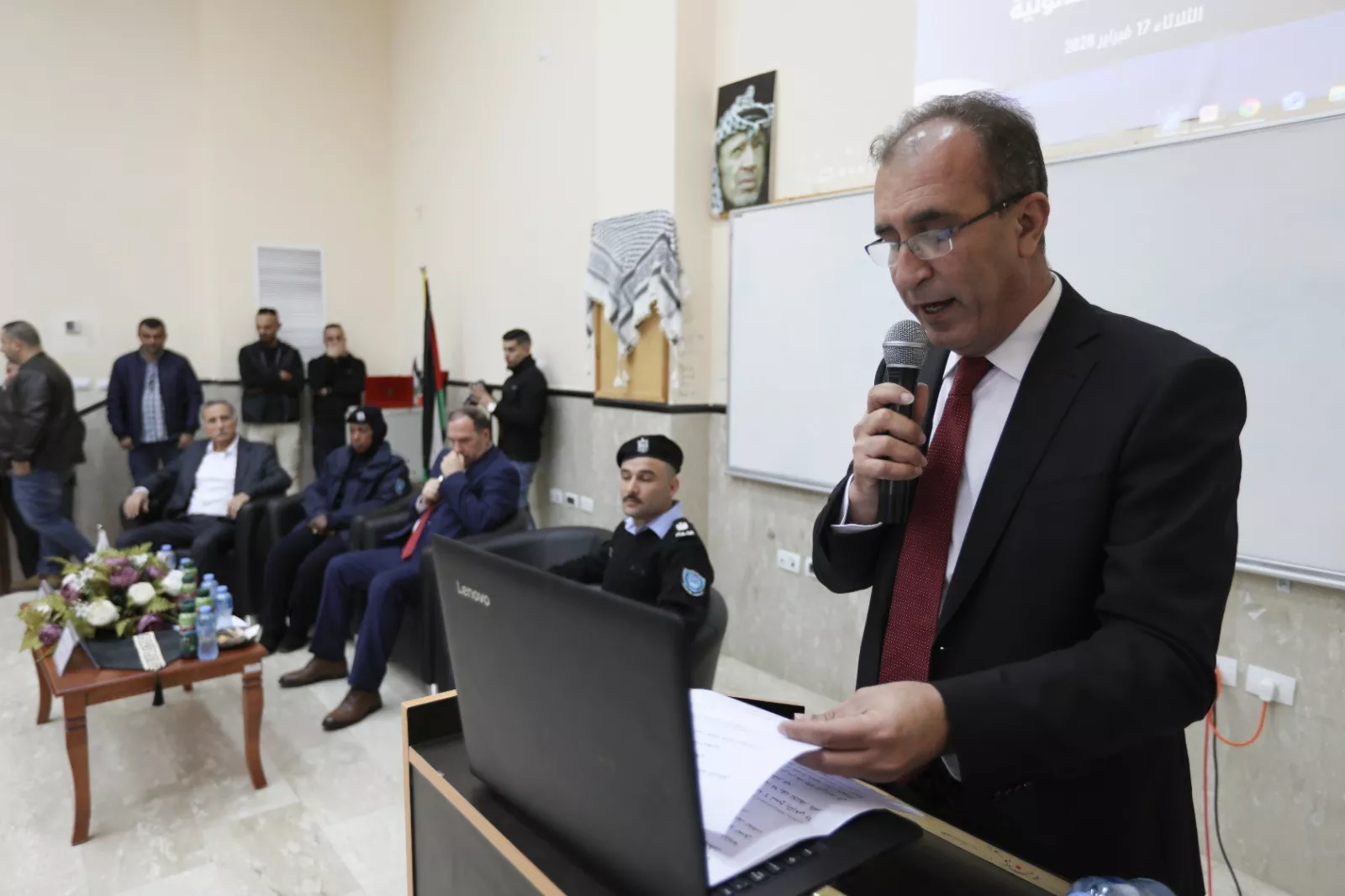
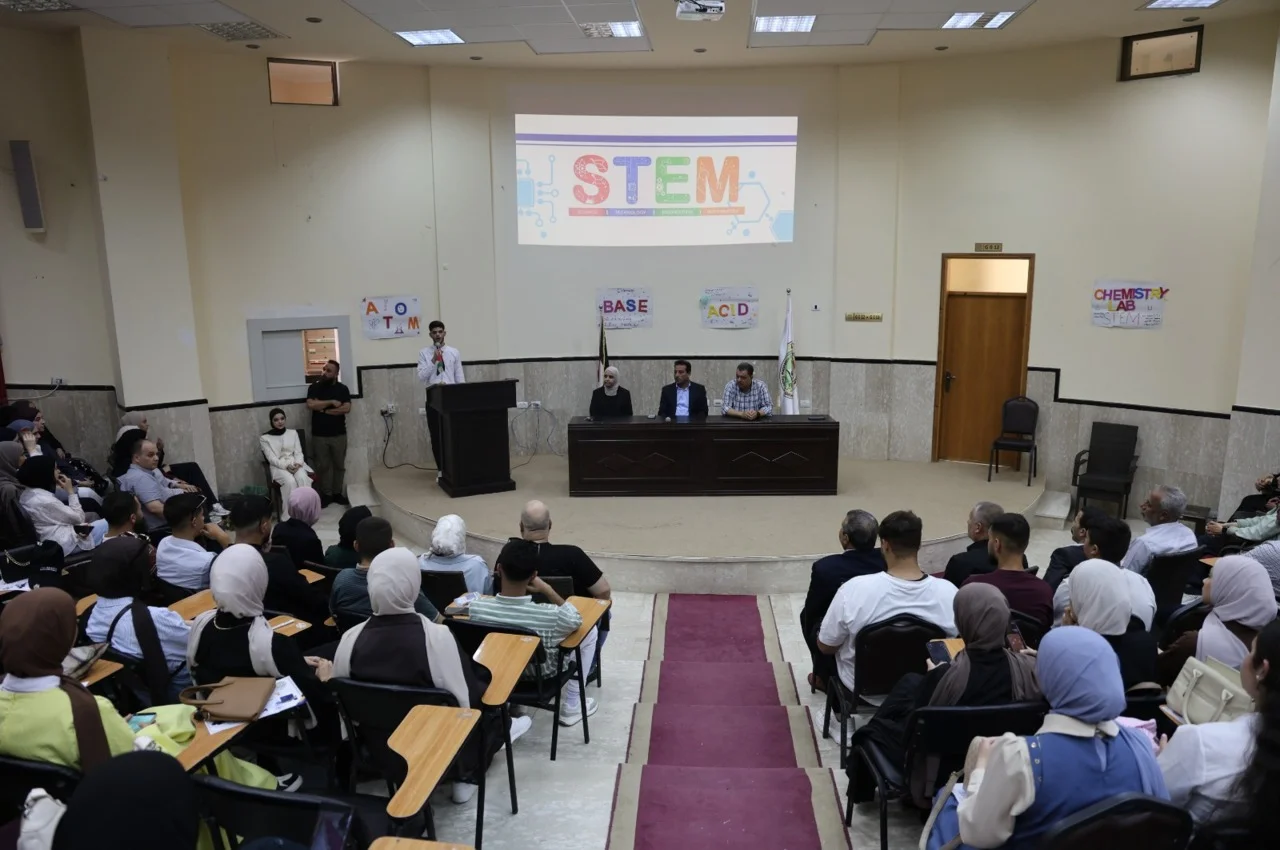
Palestine Technical University–Kadoorie (PTUK) hosted a study day titled “Drug Abuse: Health, Social, and Legal Dimensions,” under the patronage of Tulkarm Governor Major General Dr. Abdullah Kamil. The event was organized in partnership with the Palestinian Police (Anti-Narcotics Department) and the Community Protection from Drugs Association, with broad participation from official, academic, and community institutions, as well as students.
The opening session emphasized that drug abuse constitutes not only a health risk, but also a social, security, and humanitarian challenge that requires coordinated institutional action and sustained public awareness.
University President’s Address
PTUK President, Prof. Hussein Shanak, affirmed that the study day reflects the University’s national mission and its commitment to community service through strong partnerships with official, security, and civil society institutions. He stressed that universities are active partners in addressing pressing societal challenges, noting that protecting students intellectually, ethically, and nationally is a shared responsibility—particularly in the current Palestinian context.
Prof. Shanak highlighted the centrality of awareness, values, and belonging in prevention efforts, and underscored the role of high-quality education and rigorous research in producing knowledge that responds responsibly to community needs.
Governor’s Keynote
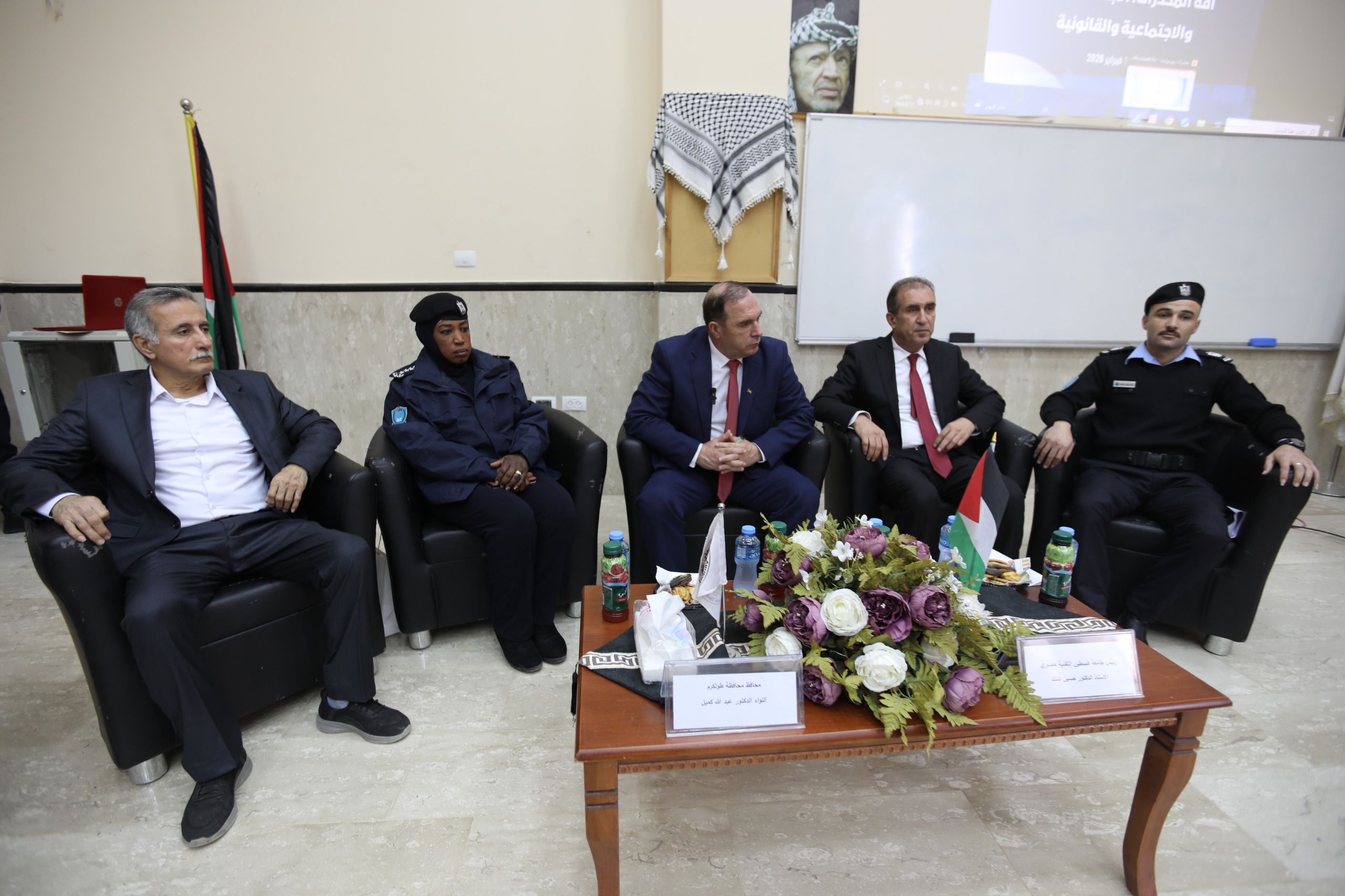
Governor Dr. Abdullah Kamil conveyed greetings from President Mahmoud Abbas and underscored the urgency of intensifying efforts to combat drugs, which he described as a threat with profound health, social, and national implications. He emphasized the role of families, awareness campaigns, and institutional coordination, commending the Anti-Narcotics Department and partners for their efforts.
Partners’ Interventions
Program Themes
Moderated by Samir Abu Shams, the program addressed:
Recommendations
Participants called for strengthened institutional partnerships among universities, security agencies, health and judicial sectors, and civil society; intensified family- and student-focused awareness campaigns; and youth empowerment through preventive initiatives. Key recommendations included establishing a specialized detoxification and rehabilitation center in the northern governorates; tightening controls on prescribing controlled medications through clear protocols and oversight; creating a centralized database for controlled prescriptions to prevent misuse; and organizing a scientific conference on drugs and hazardous pharmaceuticals supported by peer-reviewed research.
The study day concluded with a shared commitment to translating outcomes into practical, sustainable programs that enhance community resilience and public safety.