Portal | HRM | Email | LMS | Exam | Procedures Manual | Student Exchange | Repository | Research Journal | Jobs | 


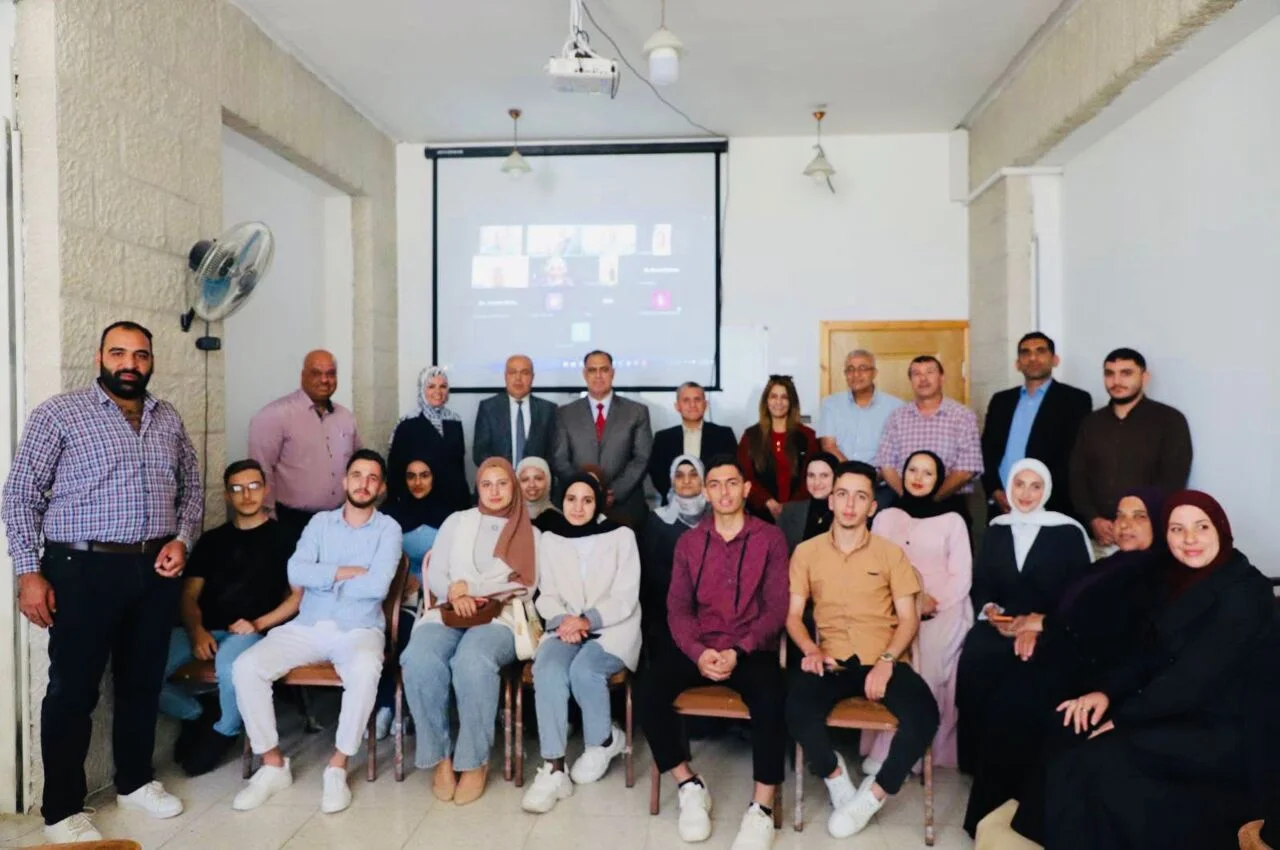
Palestine Technical University – Kadoorie (PTUK) participated in organizing the National Closing Conference of the Food Law in Vocational Education and Training (FLAVEAT) project, in partnership with Nablus Technical and Vocational University. The project is funded by the European Union through the Erasmus+ Programme and aims to showcase its key outcomes and achievements in advancing educational and training curricula related to food legislation, food law, and food safety.
Representing PTUK at the conference were Prof. Nawaf Abu Khalaf, Dean of the Faculty of Agricultural Engineering, and Dr. Wafaa Masoud, the University's FLAVEAT Project Coordinator. Nablus Technical and Vocational University was represented by Dr. Samer Jarrar, Dean of the Faculty of Agricultural Engineering and Natural Resources and Project Coordinator.
The conference brought together Mr. Khaled Maslah, Director of Public Relations at the Nablus Chamber of Commerce and Industry, and Eng. Bassam Abu Ghlyoun, Director General of the Palestinian Food Industries Union, in addition to representatives of partner institutions, faculty and staff members from both universities, and a large number of students who participated in the training programs implemented through the project.
The conference commenced with opening remarks by Prof. Dirar Alyan, President of Nablus Technical and Vocational University, followed by a speech delivered by Dr. Wafaa Masoud on behalf of PTUK. In her remarks, she highlighted the project's significant role in advancing vocational and technical education and training, while strengthening the alignment of academic curricula with food legislation and international standards. She emphasized that these efforts contribute to preparing qualified professionals capable of meeting the evolving needs of the Palestinian labor market.
FLAVEAT is an academic and development-oriented project funded by the European Union under the Erasmus+ Programme. It seeks to bridge the gap between vocational and technical education and food legislation by building the capacities of students and professionals in the sector and by developing modern educational modules that promote food safety principles while responding to local needs and international standards.